
Casey Washington · 22 October 2026
Shifting Classroom Numbers Reveal Migration Patterns Reshaping Tavora Communities
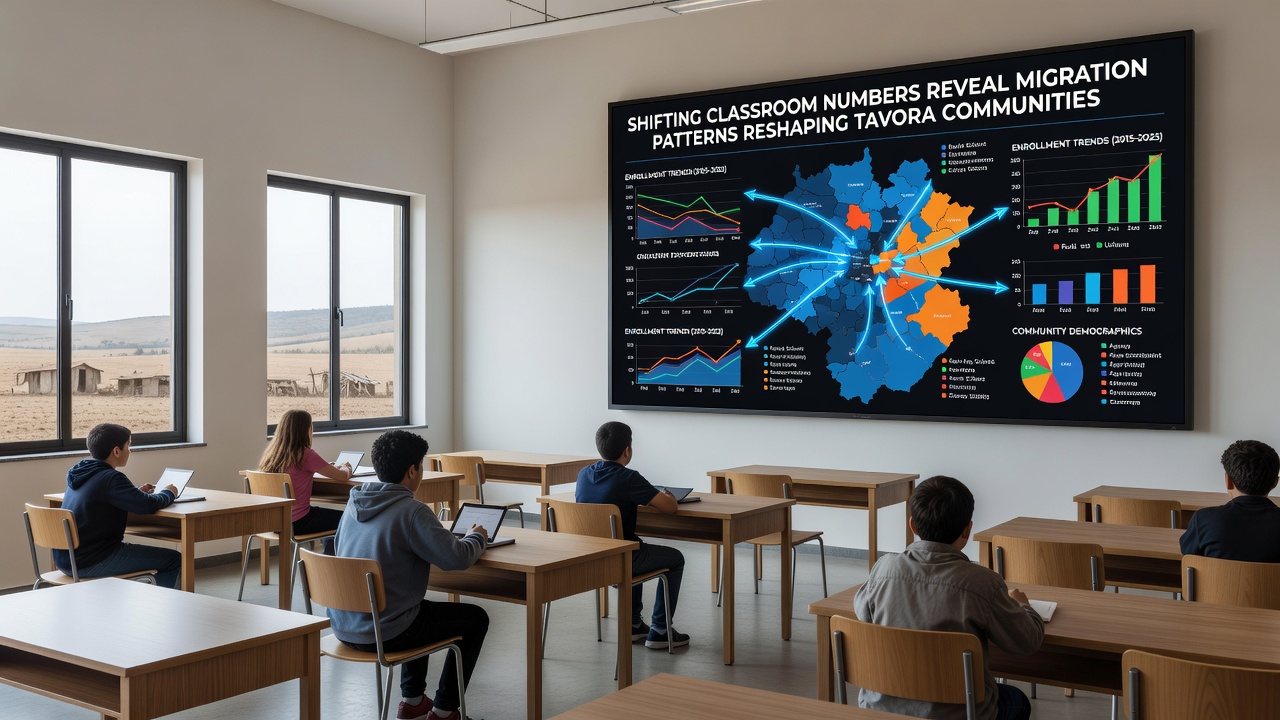
Enrollment figures from schools across the Tavora region have fluctuated noticeably over the past five years, and analysts trace these changes directly to broader migration trends within the communities. Data compiled by regional education authorities shows some villages experiencing steady declines in student numbers while others report modest increases, patterns that align with records of resident movement between rural hamlets and larger settlements.
Researchers from the University of Porto documented these shifts in a 2025 study that examined primary and secondary school records alongside census updates. The study found that communities with shrinking classrooms often lose families to urban centers seeking employment in services and manufacturing, whereas towns near improved transport links gain residents who commute to nearby cities yet maintain local ties.
Tracking Enrollment Changes Across the Region
School year data from 2021 through 2025 indicates an average drop of 12 percent in student populations at smaller valley schools, according to figures released by the Portuguese Ministry of Education. In contrast, facilities in the central Tavora hub recorded a 7 percent rise during the same period. These numbers emerge from annual headcounts taken each October, and the October 2026 round confirmed the continuation of this divide.
Local administrators note that families relocating often cite access to jobs and services as primary drivers. One village school that once served 85 pupils now enrolls 62, while a comparable institution 15 kilometers away grew from 110 to 128 students over the same span. Such variations reflect internal migration rather than overall population loss, since total regional residency has remained relatively stable.
Migration Drivers Behind the Classroom Trends
Observers point to economic restructuring in agriculture and tourism as key factors influencing household decisions. Vineyards and related industries have consolidated operations, reducing seasonal labor needs in outlying areas and prompting some workers to seek steadier positions nearer to processing facilities and visitor routes. At the same time, improved road connections have allowed others to live farther from employment hubs without sacrificing daily commutes.
European Union statistics on internal mobility within member states provide context for these local movements, with similar patterns documented in rural districts of Spain and Italy. A separate analysis by the OECD highlights how education infrastructure often serves as an early indicator of demographic change because families with children tend to relocate first when opportunities shift.
Community records also show an uptick in older residents remaining in depopulating villages, which further alters the age balance reflected in school registers. This leaves fewer households contributing to enrollment while increasing demand for different public services such as healthcare transport.
Community Responses and Adaptations
Education boards have begun consolidating certain classes and sharing teaching staff across nearby sites to maintain curriculum offerings despite lower numbers. In villages experiencing growth, temporary modular classrooms have been installed to accommodate the additional students arriving with new families.
Local councils have responded by adjusting planning applications to prioritize housing suitable for younger households in areas showing enrollment gains. Zoning adjustments approved in late 2025 aim to support this trend without straining existing infrastructure, according to municipal documents.
One initiative pairs shrinking schools with digital learning platforms that connect students across locations for specialized subjects. This approach allows smaller sites to retain viability even as overall attendance varies year to year.
Longer-Term Implications for Regional Planning
Demographers expect these classroom patterns to persist through the next decade unless broader economic conditions change. Projections based on current migration rates suggest continued concentration of younger populations around transport corridors and service centers, while peripheral communities adapt to smaller, older demographics.
Regional development funds allocated by the European Commission have supported infrastructure projects that could influence future movement, including broadband expansion and public transport upgrades. Monitoring of school enrollment will continue to serve as one metric for evaluating the effectiveness of these investments in retaining or attracting families.
Conclusion
Classroom enrollment trends offer a measurable window into the migration dynamics reshaping Tavora communities. The data gathered through October 2026 and prior years illustrates how economic and infrastructural factors steer household decisions, resulting in uneven distribution of younger residents across the region. Continued tracking of these figures will inform planning decisions as communities adjust to evolving population patterns.