Casey Washington · 5 November 2026
Community Volunteers Restore Historic Water Mills Along Tavora Streams to Revive Traditional Milling Practices
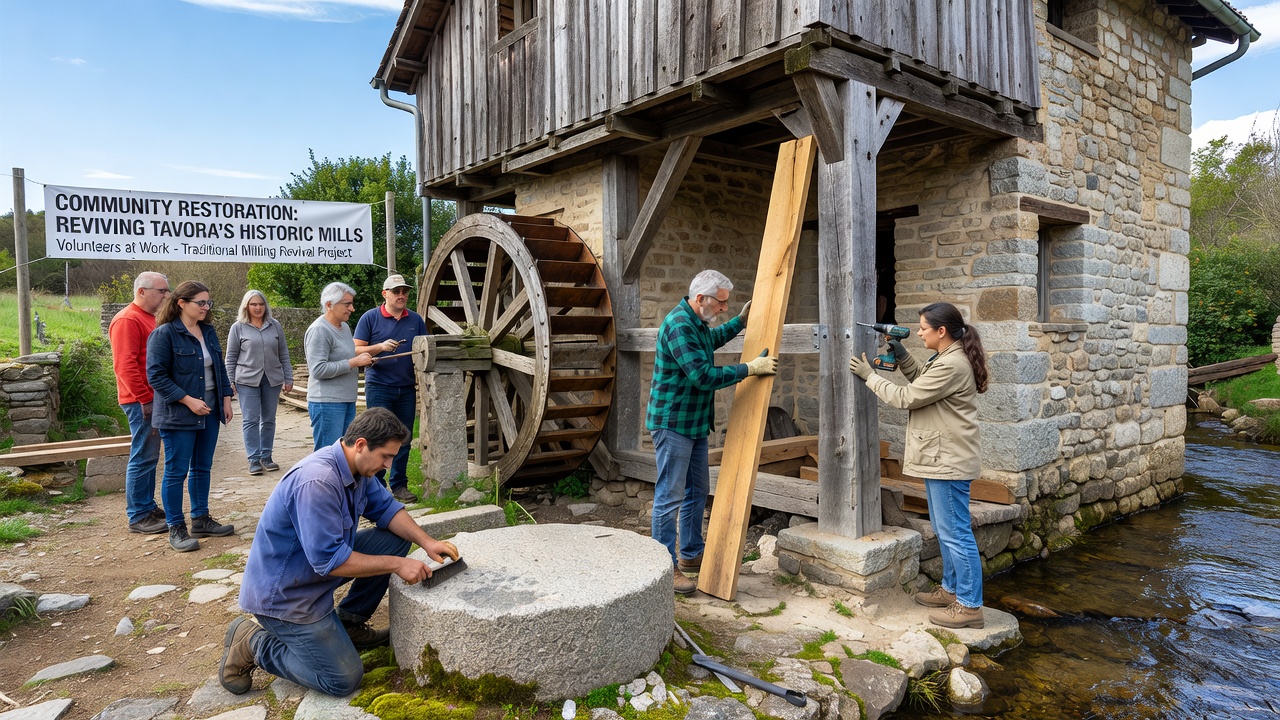
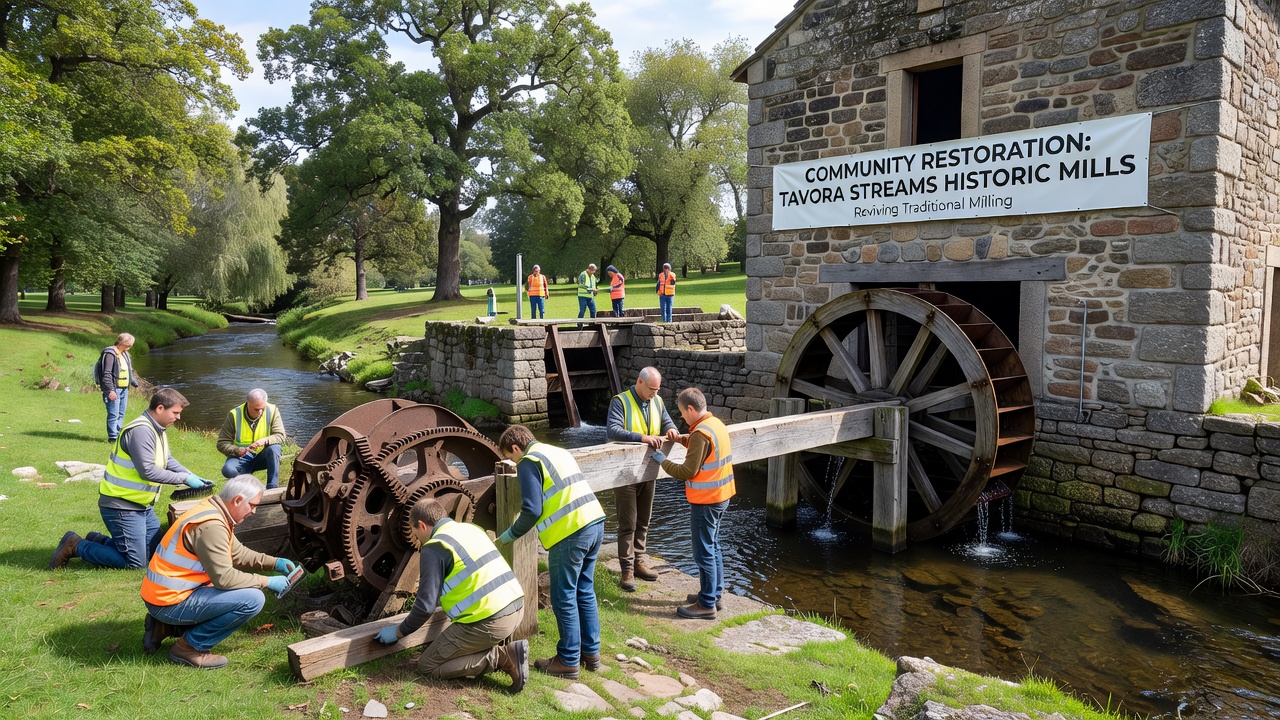
Groups of local residents in the Tavora region have taken on the task of restoring several 18th and 19th century water mills that sit along the streams feeding the Távora River, and their work focuses on returning these structures to operational status so traditional grain milling can resume. The effort draws on municipal records that list at least twelve such mills still standing in varying states of disrepair, with five currently under active restoration as of late 2025. Funding comes from a combination of regional heritage grants and private donations, while labor is supplied almost entirely by volunteers who meet on weekends and scheduled weekdays to clear debris, replace worn wooden components, and recalibrate water channels.
Historical Context of Tavora's Milling Heritage
Water mills along these streams date back to periods when local farmers relied on them to grind wheat, rye, and corn into flour for household use and small-scale trade, and parish documents from the 1700s record annual production figures that reached several hundred sacks per mill during peak harvest seasons. Many of these buildings feature stone foundations paired with iron-reinforced wooden wheels that harness the consistent flow from higher elevation springs, and their locations were chosen for steady water supply rather than proximity to larger settlements. Over the past century most mills fell silent after commercial roller mills and improved road networks shifted processing to centralized facilities, yet the structures themselves remained largely intact because they were built into the landscape with durable local granite and oak timbers.
Restoration Techniques and Volunteer Training
Volunteers begin each project by documenting existing conditions through photographs and measurements, then they consult with engineers from the regional cultural heritage office to ensure repairs follow original construction methods. Replacement parts such as new paddles for the water wheels or fresh leather seals for the grinding mechanisms are sourced from regional sawmills and blacksmiths who still maintain traditional skills, and the work proceeds in stages so that one mill can resume limited operation while others remain under repair. Training sessions organized by the local historical society teach participants how to identify rot in structural beams, how to adjust the angle of the millrace for optimal water pressure, and how to balance the millstones so they turn evenly without excessive vibration.
One team working on the mill near Quinta da Ponte completed the wheel restoration in September 2025 after six months of weekend labor, and they have since begun testing the mechanism with controlled water flows during the drier autumn months. Data collected during these trials shows the restored wheel can process approximately 80 kilograms of grain per hour when water levels are at average seasonal norms, a rate comparable to records kept by millers in the 1920s.
Community Impact and Cultural Programs
Schools in nearby villages have incorporated visits to the active restoration sites into their history curriculum, allowing students to observe the mechanical principles firsthand and to interview older residents who recall using the mills as children. Local bakers have expressed interest in purchasing flour ground at the revived mills, and several have already placed trial orders for small quantities to test consistency and flavor profiles against imported commercial products. The regional tourism board lists the mills on its heritage trail map, and guided walks that stop at two restored sites have been scheduled for the coming year to highlight both the engineering and the community effort behind the work.
November 2026 has been set as the target date for a public demonstration event at two of the mills, where volunteers plan to run continuous milling sessions and offer visitors the chance to purchase freshly ground flour. Organizers expect participation from neighboring municipalities and from researchers studying traditional food systems, and preliminary registrations indicate several hundred attendees may take part over the three-day program. The event also coincides with the release of a short documentary produced by a local media collective that follows one volunteer group through an entire restoration cycle.
Environmental and Technical Considerations
Restoration teams pay close attention to maintaining the ecological balance of the streams, and they coordinate with fisheries officials to ensure that any temporary diversions for construction do not disrupt fish migration routes during spawning periods. Flow measurements taken before and after each phase of work show that properly maintained mill channels can actually improve oxygenation in slower sections of the waterway because the turning wheel agitates the surface. Technical advisors from Parks Canada have shared case studies on similar water-powered sites in eastern Canada, where comparable volunteer-led projects succeeded in balancing heritage preservation with modern environmental standards.
Engineers note that the original mill designs already incorporated features such as adjustable sluice gates that allow operators to reduce flow during heavy rains, thereby limiting downstream erosion. Volunteers have restored several of these gates using period-appropriate ironwork, and they now record water levels weekly to build a dataset that can guide future maintenance schedules. A parallel initiative led by a university geography department is mapping sediment deposits around the mill sites to determine whether historical milling activity influenced local channel morphology over the past two centuries.
Conclusion
The ongoing restoration of Tavora's water mills demonstrates how community labor combined with targeted technical support can return disused infrastructure to productive use while preserving regional heritage. As the November 2026 demonstration approaches, the volunteers continue their work on the remaining structures, and the cumulative records from each completed mill provide a growing reference for similar projects elsewhere in the region. The effort connects earlier agricultural practices with present-day interest in locally sourced foods, and the resulting operational mills stand as working examples of that continuity.